

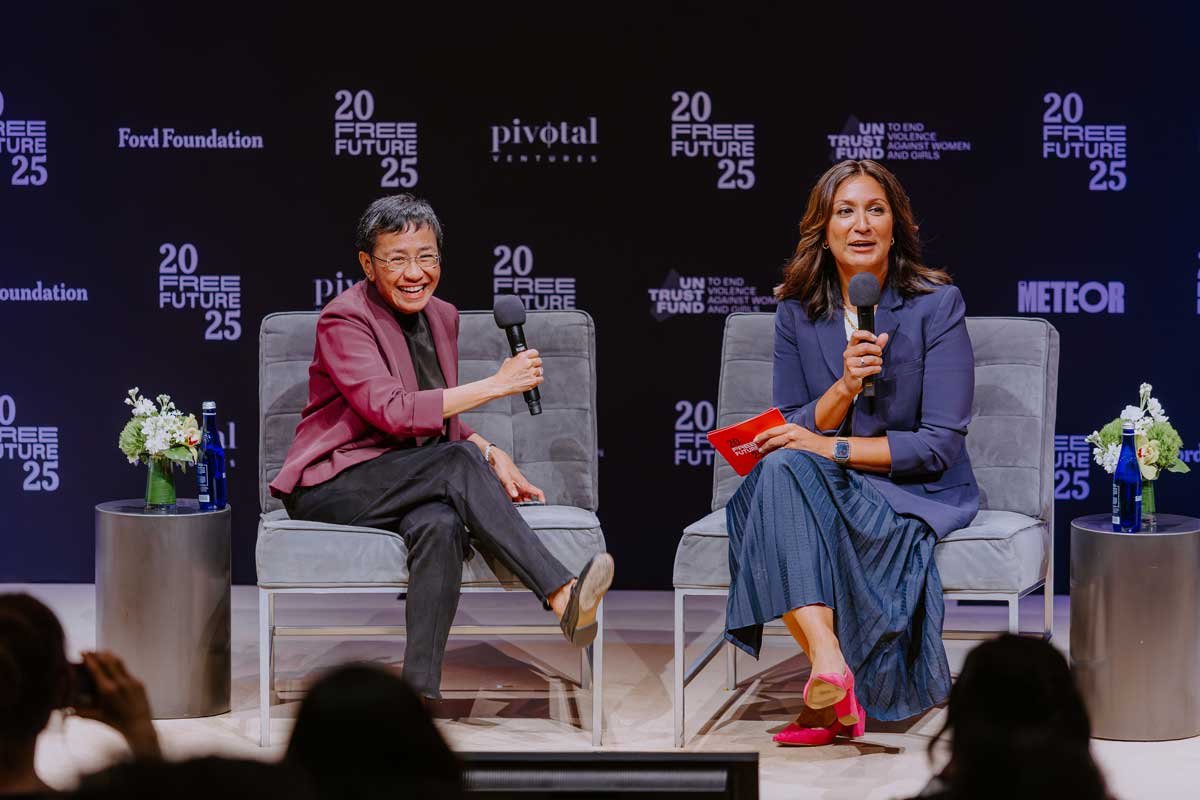
Every year, Free Future brings the world’s leading visionaries and organizers together around one urgent issue: the right of women, girls and gender-diverse people to live lives free of violence.
In 2025, we convened around a specific theme: Our Money, Our Lives: Economic Pathways to a Violence-Free World. Over the course of a day, economists, business leaders, technologists, organizers and more came together to understand the powerful ways our economic lives and our safety are intertwined.
“Violence has a cost. Money can make a difference in bringing about a solution…through economic opportunities that you can offer survivors.”
— Monica Aleman, International Program Director, Gender, Racial, and Ethnic Justice International (GREJ-I), Ford FoundationWatch highlights
from the event
Tarana Burke on sexual violence: “The problem in this country is that we do not see sexual violence as a social justice issue. And it is.
Financial violence keeps women from leading free, full lives. Sonya Passi is helping survivors change that.Tarana Burke on sexual violence: “The problem in this country is that we do not see sexual violence as a social justice issue. And it is.
Becoming an entrepreneur can enable financial independence—and safety—for women. And it’s a smart investment, says Goldman Sachs’ Asahi Pompey.Tarana Burke on sexual violence: “The problem in this country is that we do not see sexual violence as a social justice issue. And it is.
Former president of Liberia Ellen Johnson Sirleaf on why women leaders are key to a violence-free world.Tarana Burke on sexual violence: “The problem in this country is that we do not see sexual violence as a social justice issue. And it is.
What is the cost of violence? Tony Award winning performer Kara Young brings the answers alive.Tarana Burke on sexual violence: “The problem in this country is that we do not see sexual violence as a social justice issue. And it is.
We’re in an “information Armageddon,” says Nobel Peace Prize laureate Maria Ressa. But we can confront online violence and misinformation.Tarana Burke on sexual violence: “The problem in this country is that we do not see sexual violence as a social justice issue. And it is.
Siphelele Chirwa knows that change begins with youth organizers—in South Africa and around the worldTarana Burke on sexual violence: “The problem in this country is that we do not see sexual violence as a social justice issue. And it is.
What does the economy have to do with gender-based violence? Everything, says economist Fatimah Ya-Fanah Kelleher. Read more here.Tarana Burke on sexual violence: “The problem in this country is that we do not see sexual violence as a social justice issue. And it is.
Tarana Burke on the lasting power of MeToo—and how movements really work.Tarana Burke on sexual violence: “The problem in this country is that we do not see sexual violence as a social justice issue. And it is.
Why are women in the informal economy especially vulnerable to violence? Reema Nanavaty of SEWA knows the reasons—and the solutions. Tarana Burke on sexual violence: “The problem in this country is that we do not see sexual violence as a social justice issue. And it is.
With the launch of the new ALL IN initiative to end gender violence, we’re listening to these words from some of its high-profile voices—all spoken on the Free Future stage.Tarana Burke on sexual violence: “The problem in this country is that we do not see sexual violence as a social justice issue. And it is.
What happens to a workplace after sexual violence? Economist Emily Nix has the numbers, and every CEO should hear them.Tarana Burke on sexual violence: “The problem in this country is that we do not see sexual violence as a social justice issue. And it is.
For survivors who are refugees, “employment becomes a form of justice,” says Jeanne Frangieh of Lebanon’s Himaya Daeem Aataa.Program
Welcome to Free Future
SOL
Founding Member, The MeteorAbigail Erikson
Chief, UN Trust Fund to End Violence Against Women and GirlsMonica Aleman
International Program Director, Gender, Racial, and Ethnic Justice International (GREJ-I), Ford FoundationCeliné Justice
Director, Pivotal VenturesAct I: What It Takes to Prevent Violence
What Does The Economy Have To Do With Violence?
Fatimah Ya-Fanah Kelleher
Feminist Political Economist, Nawi Afrifem Macroeconomics CollectiveThe Triggers Of Violence—and The Solutions We Need
Reema Nanavaty
Director, Self-Employed Women's Association of India (SEWA)Siphelele Chirwa
CEO, Activate Change DriversSarita Gupta
Vice President of U.S. Programs, Ford FoundationThe Power of Economic Independence
Asahi Pompey
Global Head of Corporate Engagement and Chair of the Urban Investment Group, Goldman SachsStephanie Mehta
CEO and Chief Content Officer, Mansueto VenturesAct II: What It Takes to Address Violence
The Cost of Violence
Kara Young
Tony Award Winning PerformerYes, There Is Life After Violence—And Here Are The Economic Solutions We Need
Sonya Passi
Founder and CEO, FreeFromJeanne Frangieh
Founder and CEO, Himaya Daeem AataaOlga Hernandez Avila
Researcher and Human Rights Advocate, Centro Interdisciplinario de Derechos, Infancia y Parentalidad (CIDIP)Reena Ninan
Journalist and Founder & CEO, Good Trouble ProductionsThe Cost of Violence...at Work
Emily Nix
Associate Professor, USC Marshall School of BusinessSol
Founding Member, The MeteorMartín Abregú
Vice President, International Programs, Ford FoundationHow Women Wage Peace: Conversation With a Leader
President Ellen Johnson Sirleaf
Former President, LiberiaMartín Abregú
Vice President, International Programs, Ford FoundationAct III: A Future Without Violence
Abigail Erikson
Chief, UN Trust Fund to End Violence Against Women and GirlsSarah Hendriks
Deputy Executive Director for Normative Support, UN System Coordination and Programme Results (Officer in Charge), UN WomenOur Technology, Our Public Spaces, and Our Lives
Amna Nawaz
Co-Anchor, PBS News HourNobel Peace Prize Laureate. Co-founder and CEO, Rappler.
Professor, Columbia University SIPA.Maria Ressa
The Future We Deserve
ArtistFKA twigs
Tarana Burke
Founder and Chief Vision Officer, ‘me too.’ InternationalCindi Leive
Co-founder and CEO, The MeteorClosing Remarks
Abigail Erikson
Chief, UN Trust Fund to End Violence Against Women and GirlsMonica Aleman
International Program Director, Gender, Racial, and Ethnic Justice International (GREJ-I), Ford FoundationCeliné Justice
Director, Pivotal VenturesPerformance